


Leads: Rosanna Olsen and AmanPreet Badhwar
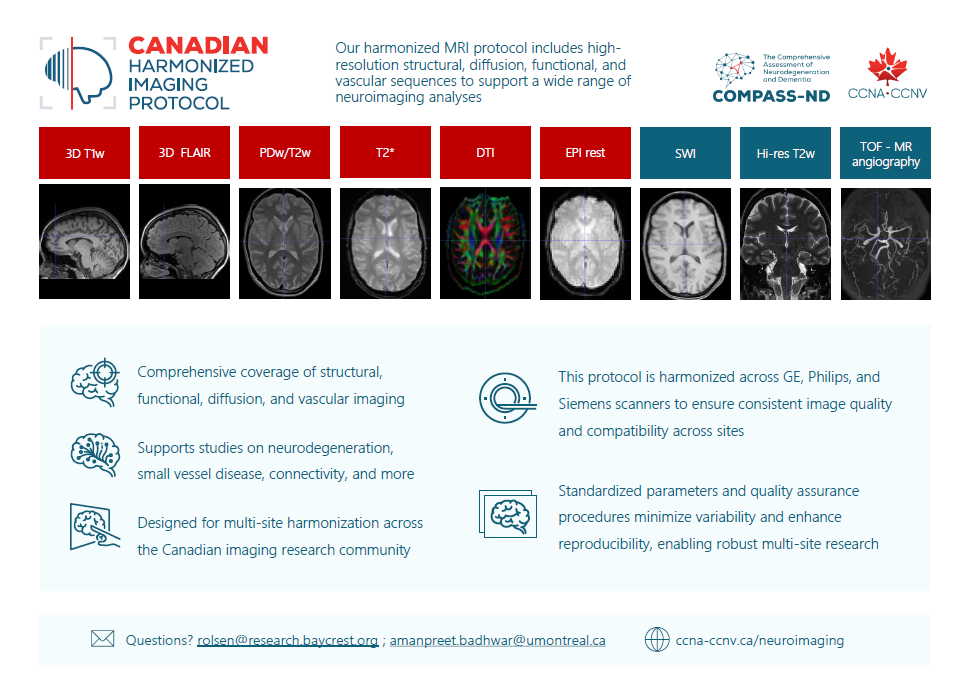
The CCNA Neuroimaging platform supports brain imaging research across Canada by providing a consistent and high-quality MRI scanning protocol for the COMPASS-ND study, which aims to better understand brain changes that occur in different types of dementia in older adults. The updated protocol builds on earlier work for The Canadian Dementia Imaging Protocol and includes improved brain scans that offer clearer images and new types of information, such as better detection of small cerebrovascular injuries and more detailed views of memory-related brain structures
The protocol is compatible with MRI scanners from all three major vendors—Siemens, Philips, and GE—allowing researchers across the country to collect comparable imaging data. The imaging methods are also aligned with other major Canadian studies, including the Canadian Longitudinal Study on Aging (CLSA) – Healthy Brains sub-study, helping to support cross-study comparisons and national data harmonization.
The Platform will also work closely with the LORIS data platform and collaborating researchers to ensure that imaging data are rigorously checked for quality and processed consistently. These efforts will support a wide range of studies aimed at understanding changes in brain structure and function in people living with or at risk for dementia.
Canadian Harmonized Imaging Protocol in a nutshell
Complete MR data acquisition guide


Get the latest news
Keep up to date with the latest research developments at CCNA. Our “News” section provides information on studies, new developments and key findings in brain health research.


