2026
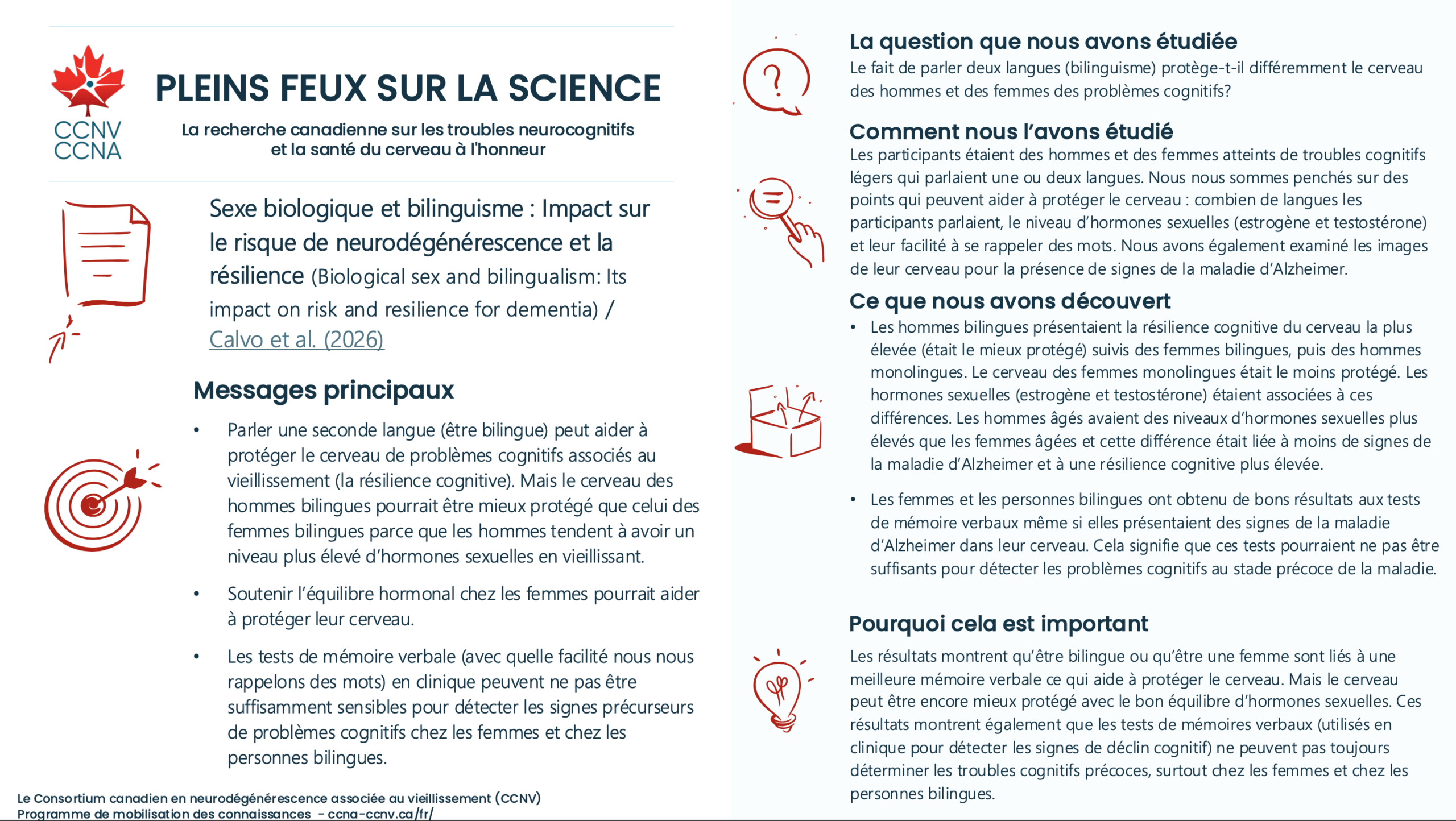
Biological sex and bilingualism: Its impact on risk and resilience for dementia
Auteurs:
Calvo, N., Phillips, N., Bialystok, E., Einstein., G.
Revue:
Alzheimer's & Dementia
Abstract
Introduction: The relationship between biological sex, considered a risk factor for Alzheimer’s disease (AD), and bilingualism, a resilience factor, is unclear. We assessed this relationship in 335 individuals with mild cognitive impairment (MCI) in a Canadian cohort.
Methods: We used univariate analysis and structural equation modelling to study the relationship between female sex and bilingualism. We created a resilience index (RI) for each participant using the residual approach. Logistic and linear regressions predicted cognitive and brain health in relation to RI.
Results: Overall, bilingual males had increased RI. Higher RI was associated with less risk of AD and less neuropathology and glial activation as indexed by plasma p-tau181, neurofilament light, and glial fibrillary acidic protein.
Discussion: In MCI, the combination of elevated estradiol levels due to aromatization and bilingualism may provide synergistic protection for verbal memory, making old bilingual males more resilient.
Partager

Recevez les
dernières nouvelles
Suivez les derniers développements de la recherche au sein du CCNA-CCNV. Notre section «Nouvelles» fournit des informations sur les études, les avancées et les principaux résultats de la recherche en matière de santé cérébrale.