2025

Patient and family perceptions of rural primary care interprofessional memory clinics for diagnosis and management of dementia: a mixed methods study

Auteurs:

Morgan, D., Kosteniuk, J., & Bayly, M.

Revue:

BMC Health Services Research

Abstract

Background: Aging rural populations globally are leading to rising numbers of rural people living with dementia, who experience challenges in receiving a diagnosis and accessing formal supports. Guidelines recommend that primary care play a lead role in diagnosis and post-diagnostic care coordination, yet there are few rural-based examples. The purpose of this study was to better understand the experiences of rural patients and caregivers attending rural primary care-based memory clinics.

Methods: The parallel mixed methods (quantitative and qualitative) design included a 10-item questionnaire (n = 27) and telephone interviews (n = 8) with patients and caregivers attending 6 rural primary care memory clinics in the province of Saskatchewan, Canada.

Results: The majority of those who completed the questionnaire agreed that results of assessments were thoroughly explained, they felt free to discuss concerns, were told about treatments, that it was helpful having all the health-care professionals together, and they learned about available supports. Results were mixed regarding whether they needed more information about the condition and its course. Four themes were identified in interviews: benefits of local rural-based care, sense of being heard, value of team-based care, and feeling supported for the future.

Conclusions: The rural memory clinics, run by local health-care professionals, address barriers previously reported by rural patients and families including geographic distances to services, challenges obtaining a diagnosis, limited specialist access, and challenges accessing post-diagnosis information and support.

Plain Language Summary

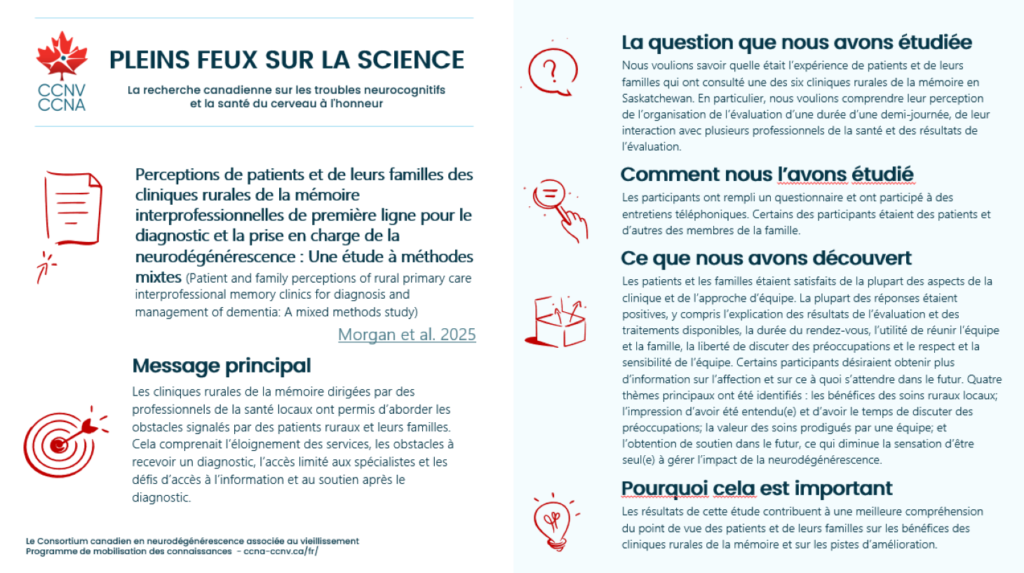
In this study, we wanted to learn more about the experiences of patients and their families who attended one of six rural memory clinics in Saskatchewan. In particular, we wanted to understand their views about how the half-day assessment was organized, their interactions with multiple health-care professionals, and the results of the assessment.

Participants completed a questionnaire and took part in telephone interview. Some of the participants were patients and some were family members.

Questionnaire results indicate that patients and families were satisfied with most aspects of the clinic and team approach. Responses were very positive for most questions, including explanation of assessment results and available treatments, appointment length, helpfulness of the team and family being together, freedom to discuss concerns, and team respectfulness and sensitivity. Some participants would have liked more information on the condition and what to expect in the future.

Four main themes were identified in the interviews: benefits of local, rural-based care; a sense of being heard and having time to talk about concerns; the value of team-based care; and receiving support for the future, which contributed to feelings of being less alone in managing the impact of dementia on the patient and family. The results of this study contribute to an improved understanding of patient and family perspectives on the benefits of rural memory clinics and areas for improvement.

Partager

CCNA - CCNV logo

Recevez les
dernières nouvelles

Suivez les derniers développements de la recherche au sein du CCNA-CCNV. Notre section «Nouvelles» fournit des informations sur les études, les avancées et les principaux résultats de la recherche en matière de santé cérébrale.